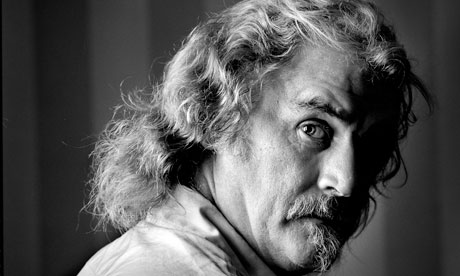
Billy Connolly talks Quartet: 'Dying is easy, but staying alive is quite difficult'
Billy Connolly
In his latest film role, Billy Connolly plays a womanising former opera star.
Quartet, set in a nursing home for retired opera singers,
features a host of British stars including Dame Maggie Smith, Sir Tom
Courtenay, Pauline Collins, Sir Michael Gambon and Sheridan Smith.
The film marks the directorial debut of Hollywood actor
Dustin Hoffman, who describes the story as being about people in their
"third act".
Comedian Connolly, 70, talks about Hoffman's skills behind
the camera, and how he was made to look older to play the role of Wilf.
Didn't Dustin Hoffman think you looked a bit youthful?
I'm
the right age, but I don't look wrinkly and I don't have a comb-over
and I'm not bald. Being hairy and bearded, I didn't fit - but, at the
end of the day, they put me through the wrinkle machine.
Wilf is a horny old guy, trying to stay alive. He's single
and he's randy and he would like a cuddle from time to time, and there's
nothing wrong with that, I think.
How did Dustin Hoffman get you involved in the film?
I actually thought we were going to do [Samuel Beckett play] Waiting
for Godot. I'd read it and found it impenetrable and then I went to see
it in London and loved it, so I couldn't wait. When I met Dustin in LA
after Route 66 [TV documentary] he said: 'Are you on the same number?
I've got a thing for you' - and I thought 'This is it - this is Godot.'
He was waiting for Albert Finney [to play Wilf] but Albert
wasn't very well, so he came to me, which was a great compliment. He
wrinkled me up and off we went!
What is it like being directed by an actor?
It's
much better than being directed by writers. Most of them rightly think
their words are carved in marble, and they obviously think it's
important you get all the commas in the right place. An actor doesn't
normally think that - he can see shortcuts to making the point. When you
get an actor as director you get the best of both worlds.
What is the overall message of the film?
Stay
young. Me? I'm 37! I haven't changed my attitude to things since I was
37. I like asking people what age they think they are - some of them
are 28, and 34, and some are 40. Stay there! That's when you were happy
and healthy. Stay there and it'll do you good. It'll feed you and keep
you alive.
Dying is easy. You just lie down, but staying alive is quite
difficult - you have to stay interested and stay in touch with
everything.
Who do you think will be the audience for this film?
Now
that I have no idea. When people hear "old" and "old folks' home" they
might stay away from it. That part of the movie company is going to have
to work very, very hard to get the audience because the people who come
and see it all love it - and they are all ages.
Do you detect a change in the film industry about the portrayal of older characters?
I
think it's all about carrying Maggie Smith shoulder high! I think she's
going to single-handedly save the old actors of the world.
I think people are getting back to the old way of making
movies. If you look at the movies of the 1930s and 40s there's no young
people in them. And then in the 50s they invented this thing called the
teenager and stuck him in everything.
It became the norm to have that kind of person as the lead -
and the more mature actor in the background. But I think they are
getting back to making movies that resemble life pretty generally. Quartet is out in the UK on 1 January 2013.
Source (including photo): BBC (includes video interview)
The Review Show with Billy Connolly
The comedian discusses his role in Dustin Hoffman’s directorial debut Quartet, his relationship with his father and his feelings about independence for Scotland.
Listen to the interview here (The Guardian)
Digital Spy Exclusive: 'Quartet': Billy Connolly hits on Sheridan Smith in new clip
Dustin Hoffman's Quartet has debuted a new clip exclusively on Digital Spy.
The footage has Billy Connolly's former opera singer Wilfred Bond hitting on Sheridan Smith's character without success.
Quartet stars Dame Maggie Smith as famed opera singer Jean
Horton, whose appearance at the Beecham House home for retired musicians
is not entirely welcomed by her former singing partners and ex-husband
Reginald Paget (Tom Courtenay).
She insists on claiming all the
attention by playing the diva, all the while refusing to perform in the
annual concert in celebration of Verdi's birthday.
Hoffman, who
makes his directorial debut with the film, was honoured with the
'Hollywood Breakthrough Director Achievement Award' at the 16th annual
Hollywood Film Awards in October for his work on the movie.
Quartet received a standing ovation when it debuted at the Toronto International Film Festival in September.
The film will release on January 1, 2013 in the UK and January 4, 2013 in the US.
Billy Connolly: My family values The actor and comedian talks about coming to terms with his children growing up and the joy of being a grandparent Elaine Lipworth, The Guardian, Saturday 22 December 2012
Billy Connolly: 'All my kids are quite funny.' Photograph: Dominic Lipinski/PA Photograph: Murdo Macleod for the Guardian
I am a kind of Victorian father. I haven't caught up with the mood of the age yet, although I look and speak as though I have. I still care about all my children
[he has four girls and a boy], and worry about my girls and always make
sure they are on the right lines. When we're crossing the road, I go,
"Righto, here we go!" as if they're six years of age. Amy, who is 24,
has her own apartment. But the other night she was going out from our
house and she said, "See you later," and I said, "Oh, when will you be
back?" She said: "I'm going to my apartment." I said: "Yes, but when'll
you be back?" She said: "I won't be back, I've got an apartment." I
went: "Oh, yeah." Pamela [Stephenson] is a much better parent than me
because she knows what's right and wrong, being a psychologist. She
knows a great deal more about behaviour than I do. I panic and get
worried about the girls and think: "Ahhh, something is wrong, she's out
too late!" Pamela just says: "Oh, at this stage she should be doing
that." But I think I'm also a product of my generation. As a family,
we are all very loving. We still kiss each other. Jamie's 42 and he
still kisses me good night. We've just got back from fishing in Mexico.
We were staying in two rooms, in a fishing lodge and at night we would
have a cigar and at the end of the evening, we'd say: "OK, you going to
bed? Good night, give us a kiss." It's very difficult bringing up the girls without
spoiling them because you sound like an old bore when you start saying:
"Oh, I had to finish every brussels sprout on the plate when I was a
boy." It's true though, I used to go to the movies and put my sprouts in
my pocket and pretend I had eaten them. I've stayed away from that kind
of behaviour towards them, but obviously we have lived well on my
earnings and I try my best to show them the value of things. But you
can't be too strict with them, because you just sound like a whinge-bag.
Anyway, spoiling them is buying them things in place of love, and
they've never been in that position. I'm a great family guy,
I'm all for keeping them all together and it's getting sad now because
the girls have got boyfriends and they don't want to come home for
Christmas. All that kind of stuff is sad, but you just have to get used
to it and grow up a wee bit. My children and I are pals and
allies, they're lovely. We all get on great. But I never carry
photographs of my wife and kids because they make me sad. I'm not one of
those guys who gets to the hotel room and puts the framed pictures up. I
really can't do it. Photos make you miss them more. Always tell the kids the truth.
When they ask where they come from, don't give them that gooseberry
bush nonsense, just tell them – they'll appreciate it much more. If they
say, "Did you take drugs?", if you did, say yes because they'll find
you out. And if you say, "I tried marijuana and I hated it, it was
horrible," and then they try it and it isn't horrible, they'll think you
were lying about marijuana and wonder whether you were lying about
heroin and could try that as well. I am totally open with my children. All my kids are quite funny.
They all really enjoy making me laugh. Scarlett works in an art gallery
in Soho here in New York, Cara is making documentary films and Amy is
studying to be an undertaker. She was working as a dress designer in Los
Angeles and she got fed up with it. She saw an advert for an intern in a
cemetery and she loved it the second she did it. It's the truth! She loves it. Pamela saved me without
being ruthless with me when I was drinking and smoking, by saying:
"Look, if you don't give up the way you're living, you're gonna die. And
I don't want to be there watching it when it happens." I haven't had a
drink for 28 years. With Pam, I discovered that you could not get away
with anything. When I married her I had to own up to everything, which
no one had ever asked me to do before. I learned to be honest with
myself, which was great. The character I play in Brave
– the dad – does a lot of shouting and thumping around and the mother
does the heavy work. And I've found that in my own life, I do a lot of
"this must be done and that must be done" but most of "it" is done by
Pamela. My marriage to her has lasted because she knows how to do
things. She knows much more than I do about technical stuff and how to
do practical things, who to phone when you need to get something done in
the house. I know bugger all. I swim along dreaming through life and
she allows me to do that. She has taken on the male role and I have
taken on what people used to think was the female role. It's brilliant being a grandfather.
My grandchildren – Walter is 12 and Barbara is 10 – are the best. When
you have children in the first place and you can see the genetics, you
see who they look like and it changes all the time. One day your son
looks like your wife, one day he looks like you. It's the same with
grandchildren. Cara burst out laughing the other day. I said, "What's
wrong?" She said, "Look at your feet." I was standing next to Walter and
I looked down and realised that our feet are identical. You'd think
they'd just been moulded in a shop. With grandchildren you understand
that the generations go on and on and on.
Lucy Kellaway talks to Billy Connolly
He has had Britain howling with laughter for decades. Now 70 and showing no signs of slowing down, the comedian opens up about getting old, forgiving his father – and the beauty of swear words
Billy
Connolly is standing with his back to the door, singing raucously to
himself. From behind, he looks slightly frightening – a mane of wild
white hair, a black T-shirt, black jeans and a big tattoo on his left
biceps – but then he turns and eyes me benignly through round
tortoiseshell glasses. I’m not sure who he reminds me of most: King
Lear, David Hockney or Ozzy Osbourne.
He invites me to sit, while he paces restlessly, checking the thermostat of the Soho hotel room.
Tell me about your hair, I say.
It is not the most obvious place to start with Scotland’s most famous
comic, film star, abused child, artist, former alcoholic and all-round
icon, but I’ve been taking lessons in how to interview him from a world
authority – Connolly’s wife, Pamela Stephenson.
I started by watching a clip of the couple’s first meeting on the set of Not the Nine O’Clock News
in 1979. Stephenson is wearing false teeth and pretending to be Janet
Street-Porter. She talks broad cockney; he talks broad Glaswegian. The
gag is that they can’t understand each other.
I
then watch a clip from just two years ago; this time Stephenson doesn’t
have false teeth, though she has false everything else: boobs, face
etc. No longer a comedian, she is a sex therapist and has installed her
husband on the couch to analyse him for her viewers’ entertainment.
She starts like this: “It seems to me that hirsuteness is quite important to you. Help me to understand why.”
This elicits a long answer about his need to hide, about being
himself, about being attractive, about the classlessness of hippies. But
when I ask him the same thing, he says: “It comes from an inability to
decide what to do with it between films, so I leave it alone.”
I point out that he didn’t say that to his wife.
“Didn’t I?” he says. “Ach, it depends what day of the week it is.”
The previous night Connolly was at the London premier of Quartet, a light comedy directed by Dustin Hoffman
set in a home for retired opera singers. He plays Wilf, an amiably
lecherous old geezer with short hair and clad in a tweed jacket. I say
the look suits him.
As retired singer Wilf in 'Quartet'
“Ach,” he says. “A lot of women said that last night, that I looked handsome. But I felt like a big Tory.”
The film is all about the indignities of ageing. But Connolly, who
turned 70 in November, tells me that he’s spent his life looking forward
to growing old (which sets him apart from Stephenson, who has paid
frequent visits to the cosmetic surgeon “because I want to be a babe”).
“I always wanted to be old as a wee boy,” he says, swinging his
cowboy-booted feet on to the coffee table. “We used to go to a swing
park and there were always loads of old men in the shed playing
dominoes. They always had knives – that’s what I liked about them. I
like old men very much.”
I protest that old men are surely no nicer than anyone else.
“Aye,” he says, changing tack. “I think young arseholes tend to become old arseholes.”
One of the difficulties with interviewing Billy Connolly is that he
says one thing one moment and another the next, his thoughts following a
curious pattern of their own.
So his mention of knives leads him to cigarette cards and from there
to self-defence and the body language of giving directions.
This ability to free-associate is part of his comic genius. Since he
started amusing his fellow welders in Clyde shipyards nearly 50 years
ago – he has never planned his performances, or written down a single
word. Instead, he meanders all over the place, laughing at his own jokes
as he does so, giving marathon performances that last up to four hours.
I wonder if he fears for his ability to go on doing it as he gets
older. In the film, his co-star Maggie Smith (“Oh God I love her, she
makes me scream with laughter”) plays a retired diva who is so upset at
no longer being able to reach the high notes she has renounced singing
altogether. Connolly says that when it comes to making people laugh, age
doesn’t matter.
“It’s nothing to do with ageing,” he says. “I remember in my
twenties, saying: f*** I hope it turns up tonight. If you look at Doddy –
Ken Dodd – he’s busier than most people I’ve ever known. Some people
accept that styles have changed and move along. Others say, f*** it I’m
out there, this is my trade and I’m going to practise it.”
But then he tells me that despite recent accolades – he’s been voted
the most influential British comedian of all time and has just been
given a Bafta lifetime achievement award – he finds the idea of
performing more alarming as he gets older. “Maybe I see the pitfalls and
threats more than I used to.” But when I ask what they are, he says
there aren’t any.
“I get great adoration, sometimes guys shake when they’re talking to
me. A man cried last night. I just put my hand on him and stroked him a
bit. He’d seen me in newspapers and films and on the stage and all that
and there he is talking to me and I’m talking back to him and he got
overwhelmed and his lip started to go. It’s weird, it’s lovely.” . . .
Not everyone, however, was so awed. Later on he says: “Last night a
guy got a bit iffy with me, you know, smart-arse about my performance.
He said I was less than good. You know how the British do that British
put-down thing that they think is funny?”
The Scottish comedian was not amused.
“I just turned and walked away in the middle of his sentence.”
This, it seems, is a trick he is getting into the habit of. Twice
during his last tour of Britain he stormed off stage in response to
heckling from the audience. When I mention this, Connolly waves his
hands dismissively.
“Generally it’s made into something it isn’t, it’s no big deal. I
wish journalists would just f***ing ask what it is and I would tell
them. Once I’ve done my two hours it’s my time. After [that] I don’t
want to be shouted at because I’m in a funny mental place.”
What is shocking – and almost sweet – about this is not that Connolly
is so sensitive to both his detractors and his fans – it’s that he’s so
unashamedly open about it. Suddenly I think of Wilf, who also lacks any
sense of propriety – though in his case it’s as a result of a stroke.
Connolly, it seems, never had one to lose, or if he did he quickly
figured out that a great living could be made by dispensing with it.
“I speak the way I think. I give it a voice. And other people will think one way and speak another.”
And what he thinks about, often, is the body.
“I blame myself for that,” he says. “About bums and willies and going
to the bathroom and venereal disease and all those things. That was the
level I came in ... I broke a lot of ground there.”
Since he went on Parkinson
in 1975 and told the joke about the man who killed his wife and buried
her with her bum sticking out of the ground so that he had somewhere to
park his bike – Britain has been howling with mirth at Connolly’s body
parts.
While he’s been delighting audiences with tales of his prostate exam,
Stephenson has been making a living telling tales of his emotions – and
has written two bestselling books chronicling them.
Doesn’t he mind, I ask, when she starts describing to everyone just
how he felt when his first wife – a recluse and an alcoholic – died? He
shakes his head. “Who better to tell it? Some f***ing journalist?”
Stephenson’s interpretation of Connolly is not always flattering: I
read something recently in which she said he was slightly autistic as
well as suffering from an attention deficit disorder.
“Did she?” He laughs fondly. “She’ll accuse me of anything. I don’t
think I’m autistic, but I do have attention deficit disorder.”
And then his mind is off on another excursion: he tells me that
Stephenson has just emailed him a list of all the different words for
depression, as he is planning to write a song in which the word “blues”
is replaced by synonyms. He laughs for a long time, delighted by the
idea. When he has stopped I ask if he suffers from the blues himself.
“Sometimes I plunge into it, headlong, but the clown with a tear is a
myth – that comedians are really dark and tortured and troubled.”
It’s odd that he says this, as he seems to fit the mould of damaged
comedian so perfectly. His mother walked out when he was four, he was
brought up by two wicked aunts, who used to hit him and rub his nose in
his soiled underpants, and he was later abused by his father.
“Well I come from a dark place but it doesn’t make me dark”, he says.
“My ambition was always to be as funny as ordinary people are; as the
regular working guys are.”
Yet for all of his admiration for the common man, Connolly has left
them long behind. He is a friend of Prince Edward and countless
celebrities, and owns three huge properties as well as a yacht. People
are always complaining that his swanking around is a betrayal of his
working-class roots.
“They’re just wankers,” he says. “That’s the press talking; they’re
talking shite as they usually do. I have deep, deep distrust of them. I
see them as my enemy. I’ve had years of experience of the vile f***ing
vitriol.”
It strikes me as strange that Connolly is so full of rage at
journalists (who as far as I can see have been more nice than nasty over
the years), but when you get him on to the subject of people who he has
real reason to hate – his father and mother for a start – he is all
mildness.
“Well I loved my father. I didn’t know my mother very well. I didn’t
meet her from when I was four until I was in my twenties,” he says
evenly, as if it was of no matter.
The reason he forgives them is partly thanks to a “wee book”.
“I think maybe Pam gave it to me. It said there’s no such thing as
hate, there’s only love and fear. I forgave my father for all that had
gone on and it took a huge load off me. It was like having a rucksack
taken off your back.”
This sounds like psychobabble to me. History shows that there is such a thing as hate.
“Well it manifests itself as hate but I think it’s based on fear and sometimes it’s encouraged by the f***ing Daily Mail.” . . .
Thus far in the interview he has said the f-word 27 times, but
instead of finding it repetitive or limiting, I like it. On his lips the
word is both funny and melodic.
“It’s also rather beautiful,” he says. “In sport, you say he whacked
it into the top right, it was f***ing beautiful. There’s no English word
to replace that.”
So why do people go on being shocked by the f-word?
“Because they’re middle-class wankers.”
And then he says: “In America they seem to have just discovered Kant.”
This strikes me as a strange turn for the conversation to have taken.
But then I realise he didn’t say that: we are still on obscenities.
“I went to see a movie the other night, Seven Psychopaths, which you must see, it’s f***ing great, and they use it brilliantly, you c***. They’ve got it right at last.”
He then starts on an inspired rant about
how the c-word never appears on its own. “Usually it’s a something c***. Like, she’s a nasty c*** that one.”
My time is nearly up, but before it is I want to ask him about his
newest accomplishment – drawing. Earlier this year there was an
exhibition of his work, including a rather nice picture of a mummified
woman in a belted dress with two heads.
I ask what I’d have to pay to own it.
“I’m not talking about that. I don’t talk about money. It’s vulgar.”
But isn’t that rather middle class?
“Money’s a boundary because it makes people feel inadequate when they shouldn’t.”
Yet for all that Connolly isn’t scared of flaunting it. As well as
the yacht and the houses in New York and in Malta, he owns a castle in
Scotland called Candacraig. This is now available for hire to corporate
groups, who for nearly £4,000 a night can enjoy an orgy of tartan and
try to imagine the presence of the many Hollywood celebrities that the
website promises are regular visitors.
I can just about see the attraction from the guests’ point of view.
But I struggle to see why the owner would want corporate fat cats
sleeping in his bed and going through his bathroom cupboard.
“I don’t care about that,” he says. “I’ve told everybody all my secrets.” ‘Quartet’ is released in cinemas on January 4
Source (including photos): Financial Times
The Big Yin expounds on Chaucer’s fart jokes, speaking Dwarvish and the irreplaceable f-word
By Matthew Love
Wed Dec 5, 2012
Billy Connolly
Photograph: Tony Lyon
Few can match Billy Connolly’s reach and longevity in the
entertainment industry. After a short-lived folk music career, the Scot
turned his attention to comedy full-time; he’s remained a wildly popular
international presence for 40 years, while compiling a massive catalog
of stand-up specials that showcase his rowdy storytelling skills. He’s
also become a documentary producer and a reliable character performer in
films such as Brave and the upcoming The Hobbit. TONY spoke to the NYC resident the day after he received an award from the British Academy of Film and Television Arts.
Congratualations on your BAFTA award. What does it mean?
I think I should die now. Or retire. I think these lifetime achievement ones are gentle hints that you should bugger off.
You play a dwarf in the new Peter Jackson movie, The Hobbit. Did you approach this differently than you would playing a man?
Well, you have to speak Dwarvish. So you can’t help but approach it differently.
So you’ve picked up a new language?
No,
I’ve already forgotten my line. Well, I had about four lines, but
they’re all along the lines of “Come on, lads, let’s show them what
for!” I have the best line in the movie, but I’m not allowed to tell
you. James Nesbitt [the Irish actor who plays fellow dwarf Bofur] was
seething with envy.
Your energy during your stand-up sets doesn’t seem to have diminished with age. How do you explain that?
I
haven’t a clue. I’ve gone on sick and come off well. I’ve gone on sick
and remained sick after the show was over. I had a virus in Australia
and I couldn’t cancel—it was the Sydney Opera House—and I had to stop
and go for a pee. I told them, “I have this virus and it makes me pee a
lot. Oh ho, pee time.” I went offstage and peed in a bucket—so we miked
the bucket.
Paradoxically, you address crowds in an intimate way. How do you envision them?
I
try very hard to unite them all as one big animal, as though I’m
speaking to them in a bar. I’ve never had difficulty communicating with
strangers. In fact, I rather like them—some of them turn out to be the
most interesting of people. If you stick to cigar smokers, fly fishers
and banjo players, you can’t go wrong—a bit dodgy on the banjo player
front, but most of them are nice.
How do American audiences compare with others around the world?
I
find them rather nice and badly spoken of by people who know nothing
about them. I think Americans generally are. Look at what you’ve given
the world, for crissakes: rock & roll and Hank Williams, jazz and
Chuck Berry. Holy fuck, you can retire on that!
When you perform here, do you find people listen differently?
No,
but I thought they would have trouble with my accent. If I use obscure
language, they’ll have a problem with it. I’ll be raging and I’ll say,
“A sleekit old bastard”—sleekit means, eh, untrustworthy—and then I’ll explain it to them. Skunner
is another one: a repulsive person who makes you physically ill, like
someone who chews with their mouth open. There’s a lot of lovely ones.
The best Americans have to offer these days is douche bag.
But you know, I love douche bag. [Laughs] The one I love also is doofus. I think it’s a beautiful word with a friendly ring to it. A doofus to me is an overweight, clueless guy, but likable.
This
reminds me of your list of childish things you say men never get over:
knickers, bums, farts and so on. Why do you think that’s so?
In
Britain, we’ve taken great joy and pride in vulgarity since the days of
Milton and Chaucer talking of farting and belching. There’s a thing
that really irritates me when some pretentious prick posing as a
comedian says, “Fart jokes,” then looks down his nose as if they were
easy to do and then goes on to tell you about Kierkegaard. Go fuck
yourself.
Ten years ago, you prided yourself on your computer illiteracy. How has that changed in the intervening decade?
Not
at all. I Amazoned two things today and it was the first time I’ve ever
bought something—if indeed I have. Maybe if they had invented brand-new
words to go along with [computer technology], but a lot of the words
they use have old meanings and they don’t relate to the new meanings.
Well, what’s nice about English is that you can simply turn a noun into a verb, like you did with Amazon.
Yes. [Pause] I hadn’t even realized I’d done that! [Laughs]
You’ve had a long relationship with the word fuck—
Oh, yes!
As it becomes more mainstream over time, do you feel protective or are you proud of it?
Where
I was born, it was part of the mainstream. Scottish author James Kelman
has lots of swearing in all of his books, and when he was interviewed
in one of those British Sunday supplements he said, “If you can give me
the English equivalent of fuckin’ beautiful, I’ll write it down.” I was
watching Barcelona play football last night and they did some things
that were fuckin’ beautiful, you know? There’s no equivalent.
I
often think of what Tommy Tiernan said: “The English language is a
brick wall between me and the audience, and fuck is my chisel.”
That’s nice. A little pretentious, but nice. He’s Irish, you know; they try so hard.
'Any Day Now' theatrical poster unveiled
The Dec. 14 release, a dramedy based on a true story, is set in 1979 Los Angeles and revolves around a gay couple who wish to adopt a child with special needs. The Hollywood Reporteris pleased to exclusively début the first theatrical poster for Travis Fine's Any Day Now, which Music Box Films -- the small distributor best known for handling the American release of theSwedish Girl with the Dragon Tattoo films -- will put into limited release on Dec. 14 and then push for Golden Globe nominations in the musical/comedy categories.
The film, a dramedy based on a true
story, is set in 1979 Los Angeles. It revolves around a gay couple --
one member of which is flamboyant and comfortable in his skin (Tony
winner and two-time Emmy nominee Alan Cumming of The Good Wife) and the other whom is still semi-closeted and not (Garret Dillahunt of Raising Hope) -- who wish to adopt a boy with Down Syndrome (newcomer Isaac Leyva) who has been abandoned by his drug-addicted mother. The film premièred back in April at the
Tribeca Film Festival, where it won the audience award. It subsequently
picked up other audience awards at the Provincetown, Woodstock, and LA
Outfest fests. Cumming's performance has attracted especially strong
notices. Source (including image): The Hollywood Reporter
Alan Cumming film wins CIFF award
The film Any Day Now, starring Alan Cumming and Garret Dillahunt, was
one of the winners of the Chicago International Film Festival's Audience
Choice Award for Best Narrative Feature.
Any Day Now's plot revolves around an abandoned mentally handicapped
teenager who a gay couple—a drag performer (Cumming) and a closeted
attorney (Dillahunt)—take in. However, once the unconventional living
arrangement is discovered by authorities, the men must fight a biased
legal system to adopt the child.
The other winner in the narrative department was Quartet, directed by Dustin Hoffman[starring Billy Connolly]. The Central Park Five was the documentary winner. The film looks at the
five Black and Latino teenagers who were arrested in 1989 and later
convicted of raping a white woman in New York City's Central Park. Each
spent between six and 13 years in prison before the actual criminal's
confession led to their exonerations.
The festival ran Oct. 11-25.
Source: Windy City Media Group
Billy Connolly honoured for life's work Billy Connolly will receive the award at a public event in December.
Comedian Billy Connolly is being honoured with a lifetime achievement award by Bafta Scotland.
The 69-year-old, who is also an actor and musician, has been
hailed by the arts organisation as one of Scotland's most successful
talents.
He will be given the award for his outstanding contribution to television and film.
Connolly will not be at the ceremony on 18 November but a recorded message will be played on the night.
Instead, he will receive the award at a public event in December.
Connolly said: "I'm really pleased and proud to receive this
trophy from Bafta in Scotland because I know you probably think we
luvvies get shiny prizes all the time. But actually, sometimes we don't.
"I'm really sorry I can't be there because I'm in San Francisco doing some prior engagements.
"But in December I will be in Glasgow, where my heart is all
the time, doing a Bafta Life in Pictures event highlighting my film and
television work from over the years, which might be quite groovy."
The event in December will see Connolly discuss his life and
career which has spanned 30 films, numerous sell-out stand-up tours and
television series.
He is set to appear in Dustin Hoffman's directorial debut
Quartet and the much-anticipated The Hobbit, both to be released next
year.
Past recipients of the outstanding contribution award include Sir Sean Connery, Brian Cox and Robbie Coltrane.
Read more at BBC
Trailer for Dustin Hoffman's Quartet
The trailer for Dustin Hoffman's directorial debut, Quartet, is now online and you can check it out in the player below, courtesy of Yahoo! Movies.
Maggie Smith, Billy Connolly, Michael Gambon, Pauline Collins, Tom Courtenay and Sheridan Smith star in the December 28 release.
Quartet tells the story of Reggie (Courtenay), Wilf (Connolly) and Cissy (Collins) who reside in Beecham House, a home for retired opera singers. Each year they stage a concert to celebrate Verdi's birthday, which also raises funds for the home.
Reggie's ex-wife Jean (Smith) arrives at the home and creates tension,
playing the diva part but refusing to sing in the concert.
Source: Coming Soon
Dustin Hoffman's 'Quartet' cast draws laughs at London appearance
Comedian Billy Connolly and Downton Abbey star Maggie Smith entertained the crowd with jokes and banter here Monday as they answered questions about their roles in Dustin Hoffman's directorial debut Quartet ahead of the film's red carpet gala screening Monday evening. The screening was part of the BFI London Film Festival.
Hoffman's film, based on a stage play by Ronald Harwood that
the playwright himself adapted for the screen, details the story of a
group of retired opera singers in a retirement home whose annual concert
to celebrate composer Giuseppe Verdi's birthday is disrupted by the arrival of an eternal diva played by Smith and the former wife of one of the residents.
Smith, whose turn as the sharp-tongued countess Violet Crawley in Downton Abbey has
been a TV ratings hit in the U.K. and the U.S. alike, was at one point
asked if she knew that a sandwich seller with an outlet outside the
Venice Film Festival's main theater had named a sandwich after her. "Is
it ham?" she asked in response - a reference to an unskilled actor who
overacts.
Connolly, whose stand-up comedy routines led Hoffman to cast him in
his directorial debut, was up and running with humor from his first
question.
Asked how Hoffman was as a director, fellow ensemble cast member Pauline Collins described
him as a "dynamo and a darling," mostly because "it was clear he
understood actors." Connolly's immediate response was that he'd
forgotten the question in a playful reference to the themes of old age
in the film. "A nightmare – tantrums, long silences, inappropriate
touching," Connolly then said, before adding that Hoffman actually "was
excellent."
Hoffman jumped in to ensure that Connolly meant the director had provided "excellent touching."
When asked if she felt she started being asked to play "ageing women"
a little early on in her career and whether she minded or not, Smith
said she was "glad to get any work" and the fact "they're all 90 is
neither here nor there."
Hoffman added that he knew Smith was getting offers of other kinds of
film work all the time, noting she'd only last year turned down My Week With Marilyn.
Fellow ensemble cast members Tom Courtenay and relative youngster Sheridan Smith at 32 also joined in the fun.
Courtenay chimed in with an impression of Hoffman as a director and
the points during the shoot when he knew the debutant helmer was happy.
"Gorgeous, gorgeous take, that's in the movie," Courtenay said Hoffman
would bellow.
But one question drew incredulity from Connolly when he was asked if he felt more likely to be inappropriate as he got older.
"Are you kidding me on"?, Connolly said in his Scottish drawl. "I've
been accused of being inappropriate from day one. I have pretty much
said exactly as I please all my life. I wasn't just pretending to be
old."
On a more serious note, the cast members were asked if they thought
that a fresh genre of movie had been invented on the back of the
critical and boxoffice success of movies featuring older casts, such as The Best Exotic Marigold Hotel, The King's Speech as well as TV shows, such as Downton.
"I think it is because a lot of grown-ups would like films [made] for
grown-ups about grown-ups. I can only hope that's correct," Smith said.
Hoffman and company also revealed that much of the dialogue in the
film came from the Oscar-winning actor making his cast feel free to
improvise. "It was openly encouraged and a very good idea," Connolly
said before adding a complaint that his best ad lib was left on the
cutting room floor.
Hoffman explained that when they were shooting, Connolly and
Courtenay's characters were meant to be watching a deer on the edge of
the forest in a highly-charged emotional scene.
Being "low-budget filmmaking," Hoffman said it ended up that the
separate CGI deer scene just didn't sit right with the other film
footage. Connolly's improv quip for the scene was: "Do you think he
knows how delicious he is."
The film will be released in the U.S. by the Weinstein Co., which is giving it an Academy-qualifying run on Dec. 28.
Source: Hollywood Reporter 'Quartet' review - BFI London Film Festival 2012
Director: Dustin Hoffman; Screenwriter: Ronald Harwood; Starring: Maggie Smith, Billy Connolly, Tom Courtenay, Pauline Collins, Sheridan Smith, Michael Gambon; Running time: 90 mins; Certificate: TBC
Dustin Hoffman had a trial run behind the camera way back in 1978 for pet project Straight Time, but ended up as an uncredited director for the hard-hitting crime drama. Quartet, his first proper stab as a filmmaker, is an altogether more sedate and cosy affair.
It
takes place at Beecham house, a retirement home for musicians that
counts the likes of Billy Connolly, Tom Courtenay and Pauline Collins
among its residents. Each year the house holds a concert to celebrate
composer Giuseppe Verdi's birthday, but their latest money-spinning
event is thrown into jeopardy when Reg's (Courtenay) ex-wife Jean Horton
(Maggie Smith) comes to live at Beecham.
Still nursing a broken
heart, Reg can't bear to face Jean, and it takes some cajoling from Wilf
and Cissy - all part of a classic Rigoletto recording back in
the day - to mend old wounds in the group. They're also not helped by
Jean's resistance to performing - she was a superstar in her youth and
believes she'll tarnish that memory by singing now.
Quartet has a warmth and charm that'll likely make it a firm hit with the same crowd that turned out for The Best Exotic Marigold Hotel.
Both films were marked by flinty, terse performances by Maggie Smith,
with her characters (both needing hip replacements!) gradually warming
over time. Like Marigold, Quartet tackles ideas of ageing without pushing the story into too dark a direction.
The
film's greatest strength lies in the excellent performances from the
cast. Connolly provides much-needed light relief as ladies' man Wilf,
who describes himself to the in-house doctor (Sheridan Smith) as like
"vintage wine and seasoned wood". The likes of Michael Gambon and Andrew
Sachs also leave an impression in their fleeting roles.
Ronald
Harwood's script, based on his own stage play, occasionally betrays its
theatrical roots with some dense dialogue and reliance on the same
locations, but his story of the elderly finding a way to relive their
glory days is sure to cement this as a blue rinse favourite.
Source (with photos): Digital Spy
Dustin Hoffman's 'Quartet' debuts at Toronto Film Fest
On Sunday September 9, “Quartet” had its première at The Elgin at the Toronto International Film Festival. “Quartet” is the directorial début of Dustin Hoffman, and stars Maggie Smith, Michael Gambon and Billy Connolly.
Gracing the red carpet première were Director Dustin Hoffman, Maggie Smith, Billy Connolly, Aaron Paul, Pauline Collins, Tom Courtenay, Lisa Gottsegen, Eline Powell, Jake Hoffman and Max Hoffman.
In “Quartet,” Cecily, Reggie and Wilfred are in a home for retired opera singers. Every year, on October 10, there is a concert to celebrate Verdi's birthday and they take part. Jean, who used to be married to Reggie, arrives at the home and disrupts their equilibrium. She still acts like a diva, but she refuses to sing. Still, the show must go on... and it does.
This is the début of the film and it is slated to be released in the U.S. on Friday, January 4, 2013.
Read more at Examiner.com (includes video clip and red carpet photo gallery)
Billy Connolly talks aging in 'Quartet' In the Dustin Hoffman-directed Quartet - about a retirement home for Brit musicians and opera singers - one of the characters repeatedly quotes the supposed Bette Davis line, "Growing old is not for sissies."
Billy Connolly, who plays a member of the title operatic quartet -- and who turns 70 in November, takes issue with the line.
Old age, the bawdy Scottish comedian/actor says, "is lovely as long as you don't pay any attention to it. Don't let a number control your life. People make decisions based on what number you've become, which I think is quite baffling. It's like acting your street number. Because you've become 57 or 58 you should wear beige or wear wide trousers with a saggy ass.
"And I find it a lot when I go home to Glasgow and I meet people I went to school with. Some of them are in great shape, but some of them have voluntarily become old men. They've gone for the old-guy haircut and the old-guy sports jacket and that terrifying little half a raincoat that they wear.
"And of course, they call ME Peter Pan," Connolly adds with a smirk, dressed in black jeans, shirt and jacket. (He still cuts a solid enough figure to be cast an axe-wielding dwarf Dane Ironfoot in Peter Jackson's three-picture adaptation of the Lord of the Rings prequel The Hobbit.)
His character in Quartet, a charmer named Wilf, cheerfully says whatever sarcastic thing pops into his head - attributed in the script to a stroke. Given that it is Billy Connolly in a nutshell, we ask him if he had this stroke when he was 12, which elicits a hearty laugh.
"Wilf was perfect to play, I understood him, which is a great benefit. I could relax within him." But it was his "other half," quartet member and lifelong best friend Reggie (Tom Courtenay) that completed the chemistry.
"Tom's character is my pal, and his stiffness, and his fear of the future and his fear of Maggie (Smith, who plays Reggie's diva ex-wife), just encouraged me in my silliness."
I mention the irony of Hoffman directing a movie about British opera singers, given the ancient tale of Lord Laurence Olivier telling him "Dear boy, why don't you try acting?" while filming The Marathon Man.
"I've always hated that story," Connolly says, "because in my opinion Dustin could act Olivier off the map. And he's a great director because he's a great listener. If there's a line that's redundant, you could say 'Dustin, I think I've said this before,' and he'd say, 'Yeah, throw it away.'
"He liked economy. He said this lovely thing to me, 'Americans make movies, and the British make talkies. You say too much. It's a visual medium.' "
And with that, how about a "method" question. How did Connolly put himself in the mindset of being in a retirement home? "I thought about school," he says. "There's school and jail. Old folks homes are all pretty much the damn same. I'm against them. There's a mindset of getting rid of the old because they're old."
Meanwhile, he was surprised to find out his highly regarded fellow "retirees" were all longtime fans of his comedy, particularly Dame Maggie Smith.
"Maggie Smith is very funny. She does a brilliant Glasgow accent. She'd say little Glasgow sayings to me in Glaswegian, and it blew me sideways laughing."
From Maclean's: TIFF 2012 video: Most fun ever on a red carpet, pretty sure
Jessica Allen with Billy Connolly, Dustin Hoffman, and an up-and-coming actress named Maggie Smith
With many top actors also directing films, from George Clooney to Clint Eastwood, Dustin Hoffman has remained on the other side of the camera - until now, with the filming of Quartet, the actor will finally take on directing for the big screen, it was announced by the BBC Films and other producers on September 12.
Oscar-winning Hoffman will adapt the stage play Quartet by Ronald Harwood, who also wrote the screenplay, and is best-known for his scripts of The Diving Bell and the Butterfly and his Oscar winner The Pianist.
Hoffman assembled a venerable cast of British actors, including Dame Maggie Smith and Michael Gambon, both of Gosford Park and Harry Potter films, Tom Courtenay (Billy Liar, The Dresser) and Billy Connolly (Gulliver's Travels, Mrs. Brown).
The story about aging and mortality follows ex-opera stars living in a retirement home who gather each year to celebrate the birthday of Giuseppe Verdi. When an ex-diva arrives, old conflicts arise to jeopardize the annual concert.
Quartet began shooting this week in England for release in theaters in 2012.